
Design
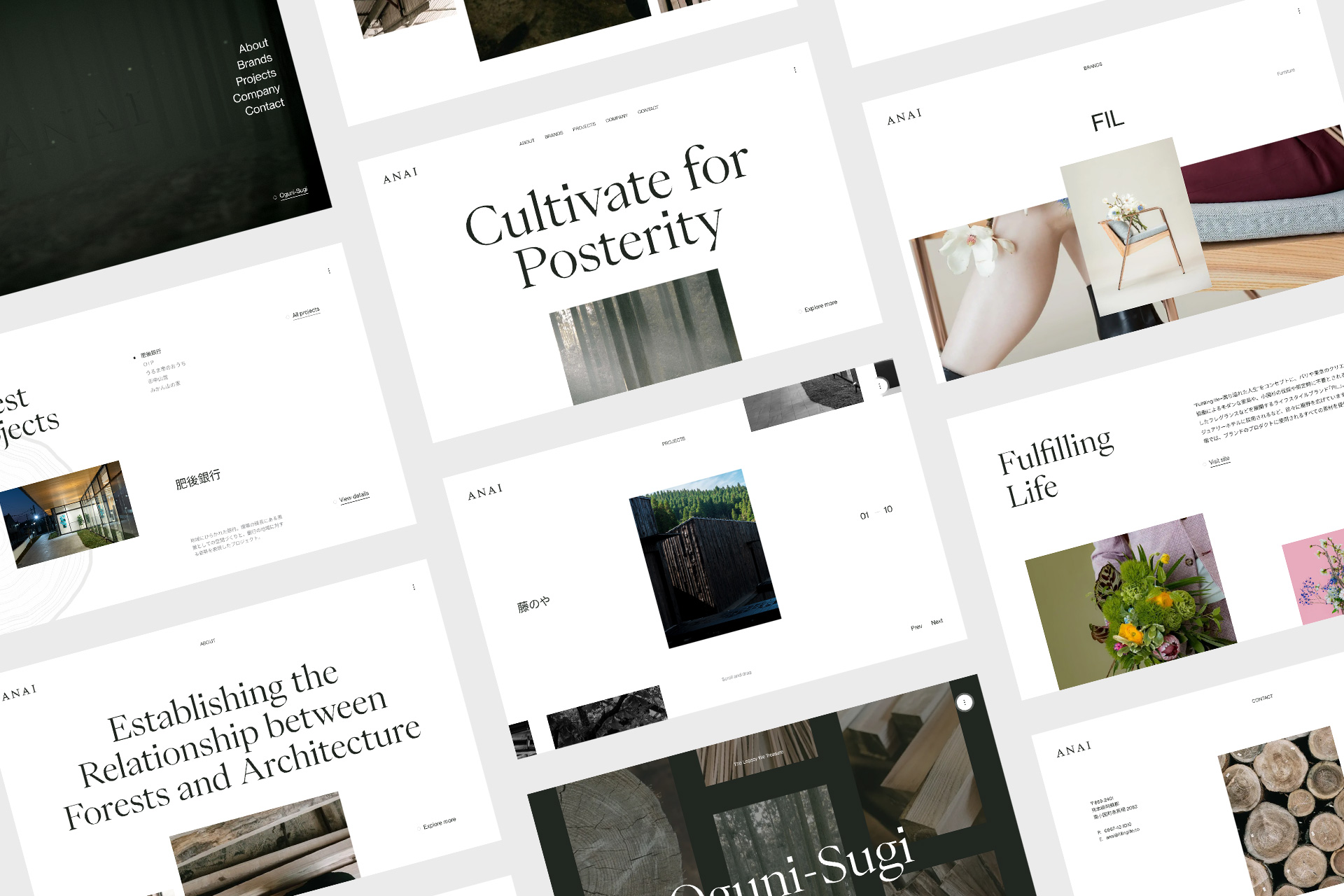
For the ANAI corporate website, the goal was to create a refined and creative visual identity that reflects the company's businesses and brands. While prioritizing an intuitive and comfortable user experience, I also aimed for a highly sophisticated design that could stand on its own as a visual composition. Motion and animation were incorporated throughout the website to express the company's character and showcase its projects and brands in a compelling way.
During the design phase, I developed working prototypes for key visual interactions. This approach also made it easier to fine-tune the details during implementation.
For the homepage, I intentionally avoided repetitive layouts to give each section and its content a distinct presence. At the same time, shared UI components were designed consistently to ensure that even first-time visitors could navigate the website intuitively.
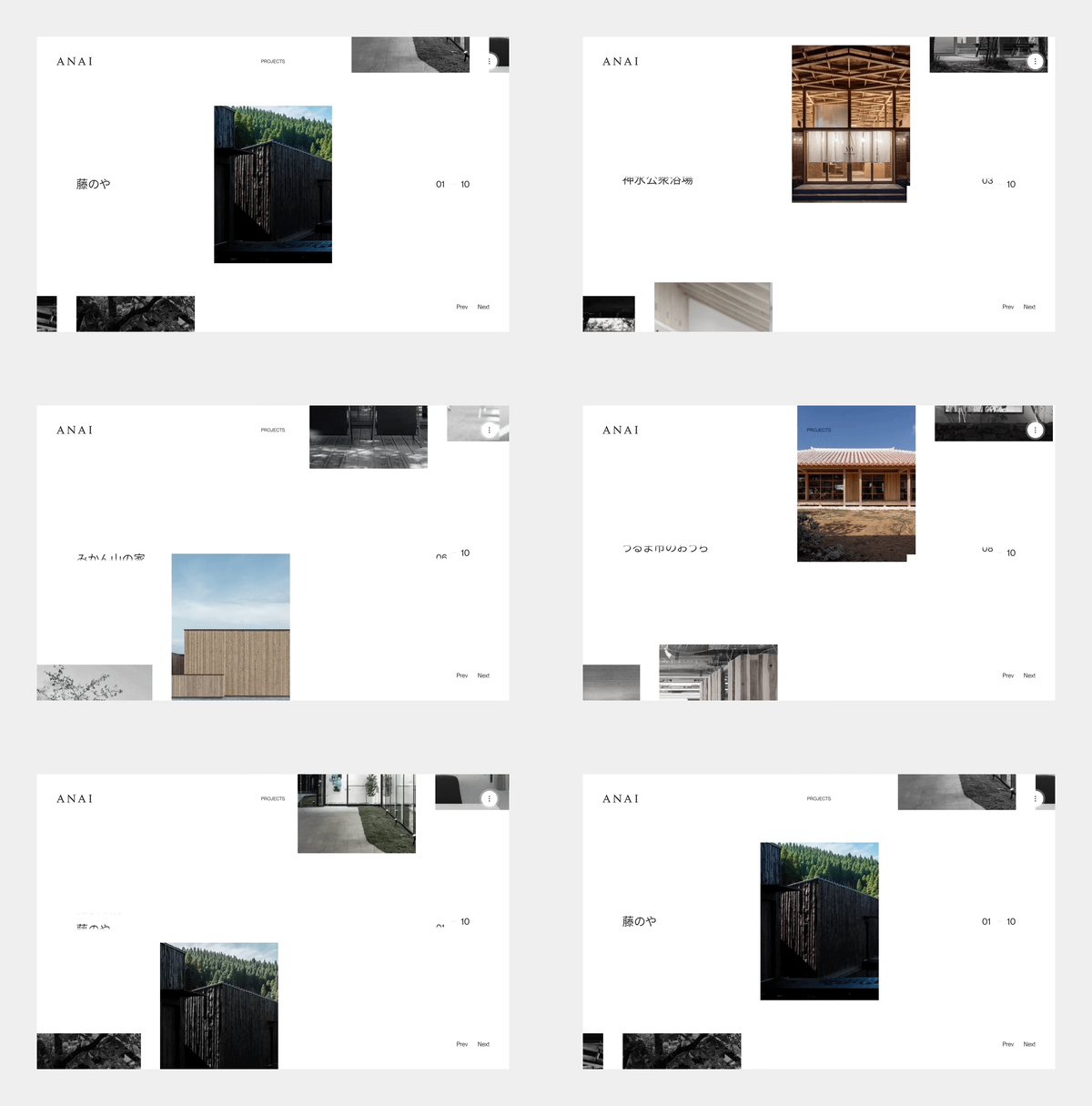
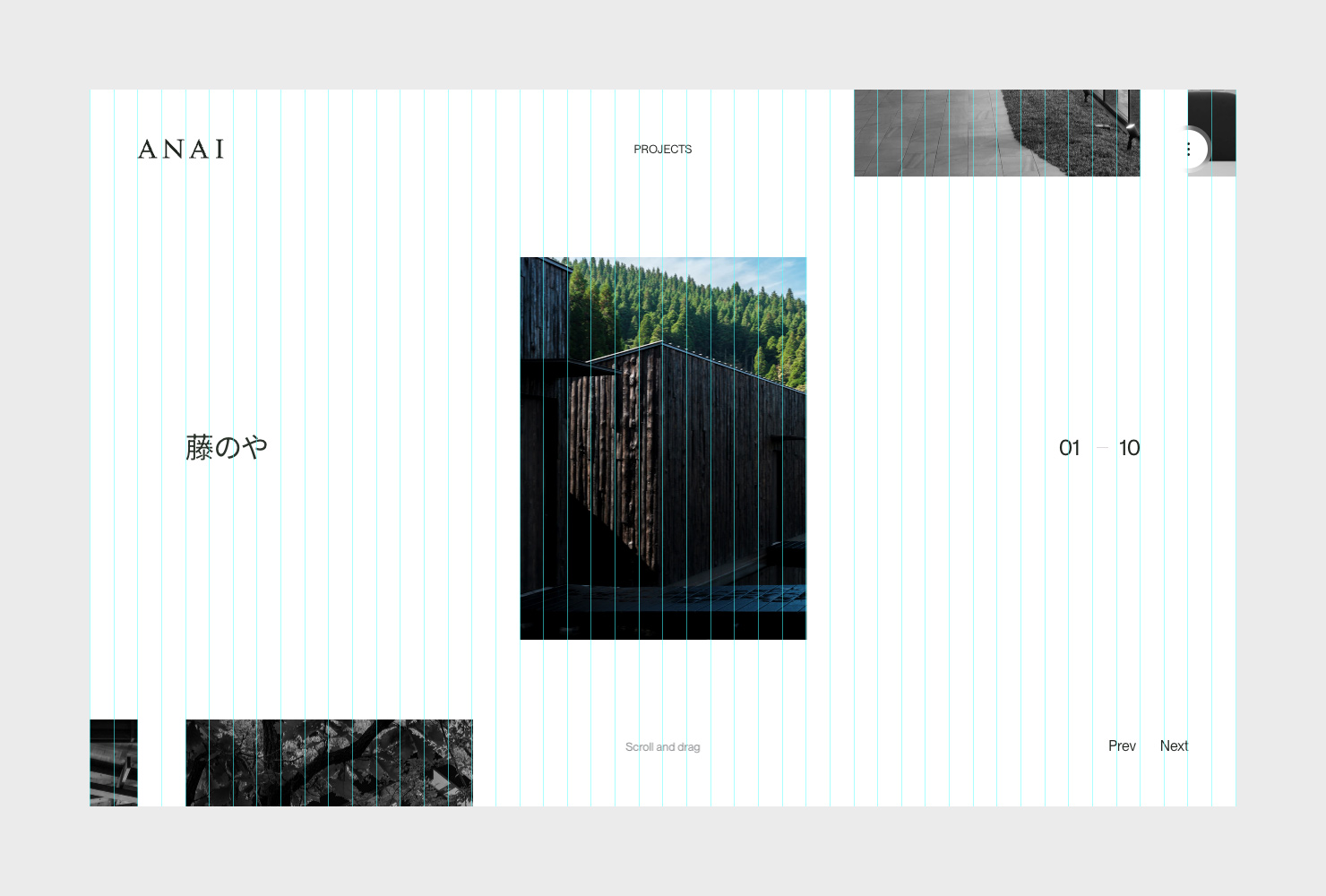
The PROJECTS listing page features a distinctive interface built around an infinitely looping slider that supports both scrolling and dragging. By keeping the active project centered on the screen, users can explore and select projects without having to shift their gaze.

Animation
The animations were also developed around a specific concept. ANAI is a company that works with wood, including the process of milling timber. I wanted to incorporate two contrasting qualities into the motion design: the organic nature of trees, each growing with its own character in the forest, and the sense of order that emerges when ANAI processes timber into precise forms.
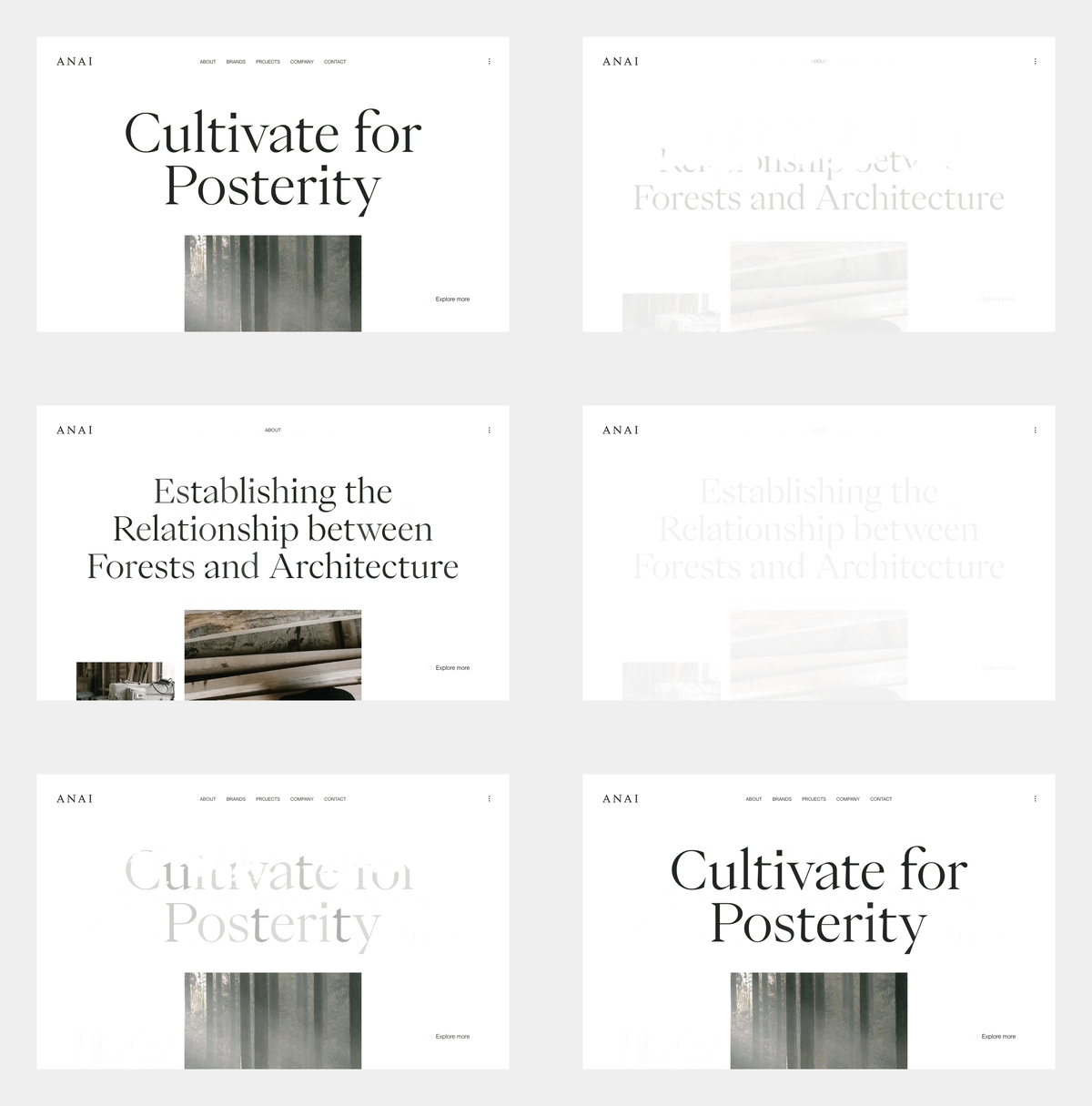
For the text animations, I used a mask reveal that moves upward from the bottom, inspired by the way trees grow from the ground toward the sky. This was combined with randomized fade-in effects to represent the individuality of each tree. By carefully balancing these expressions with visual appeal and usability, I was able to create a distinctive motion style that feels true to ANAI's identity.
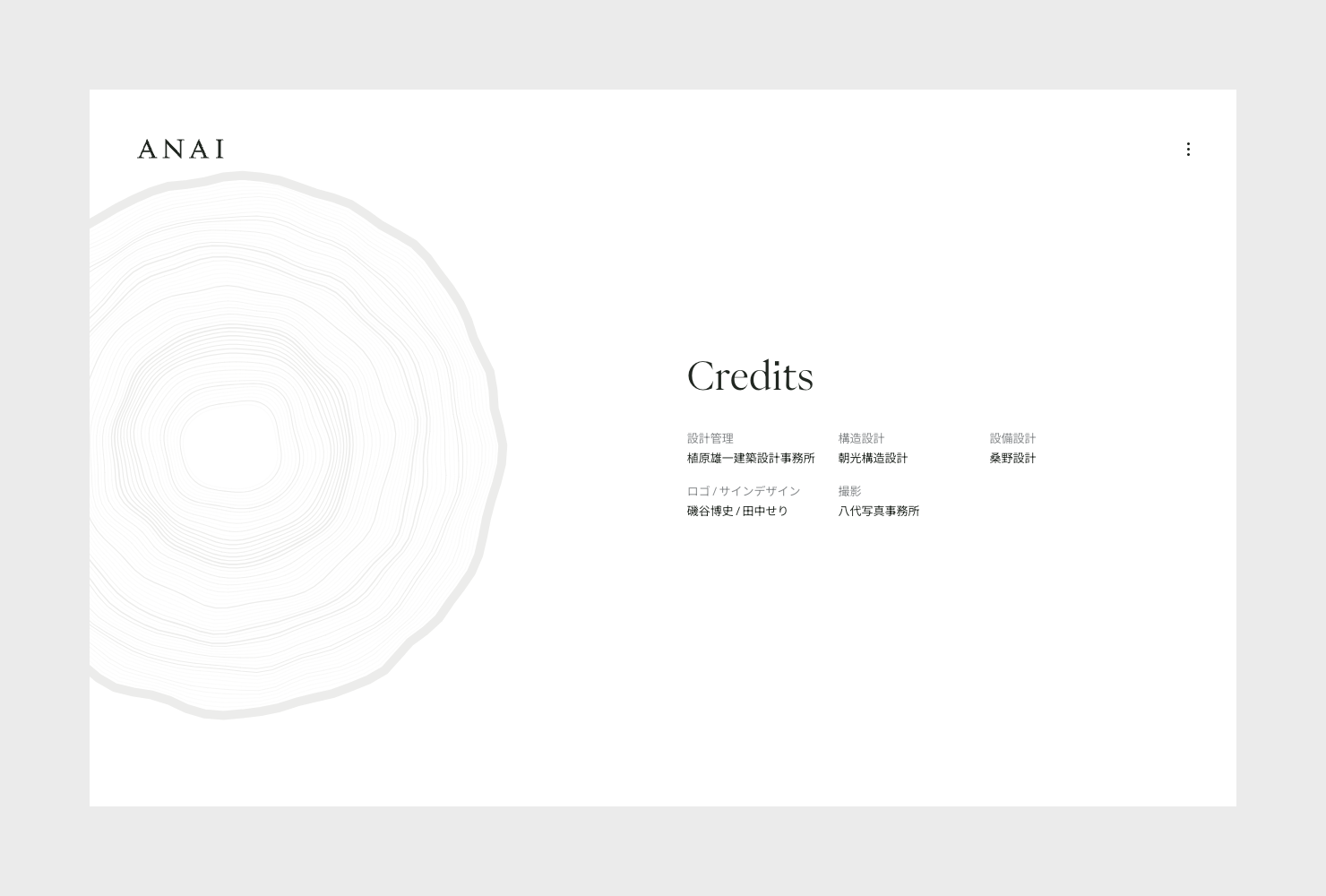
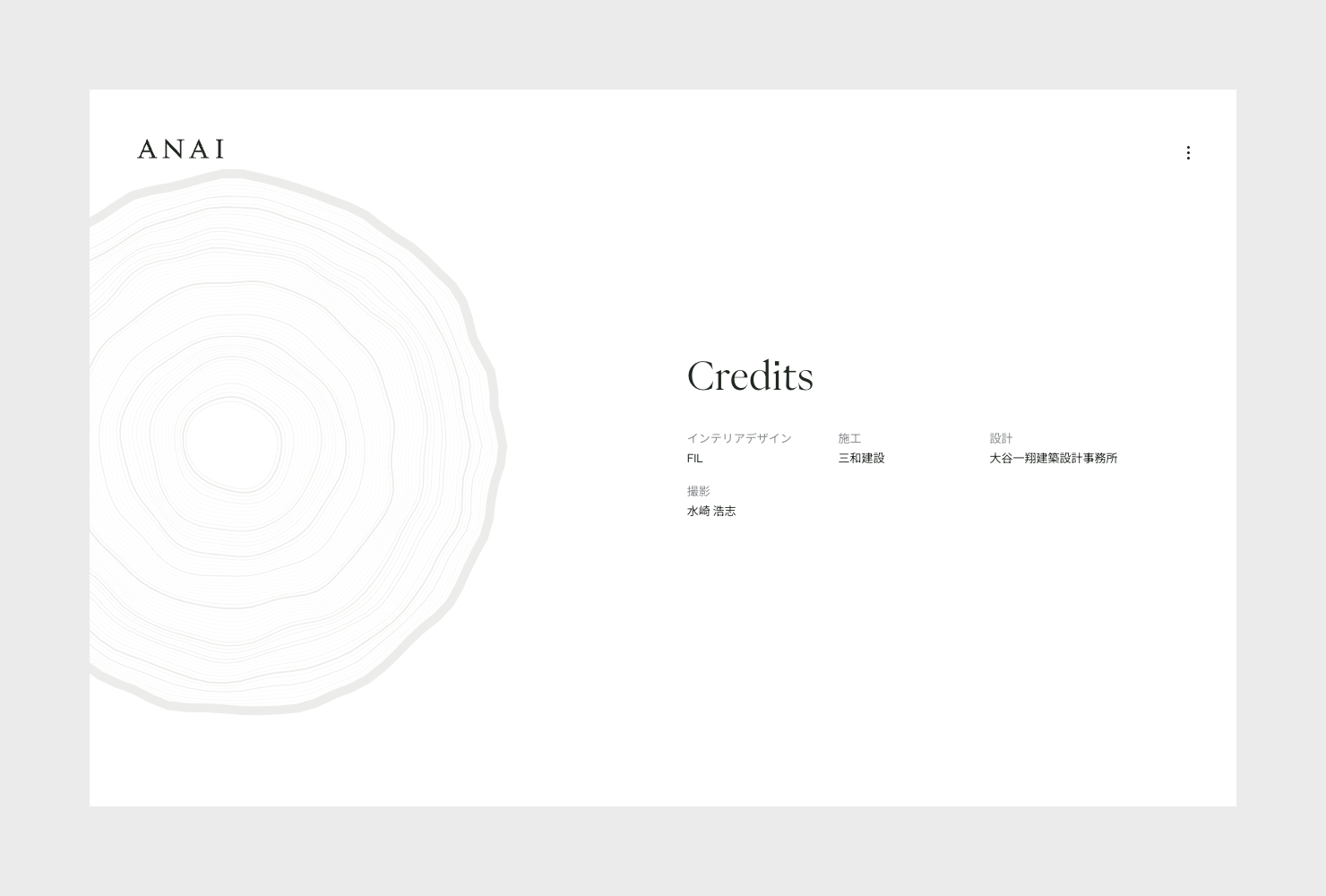
Another detail is the illustration of a tree cross-section displayed near the credits on the PROJECTS and BRANDS detail pages. Each time it appears, subtle variations are generated using Canvas. To reduce the load on the main thread, the implementation uses OffscreenCanvas to move part of the rendering process to a Web Worker.
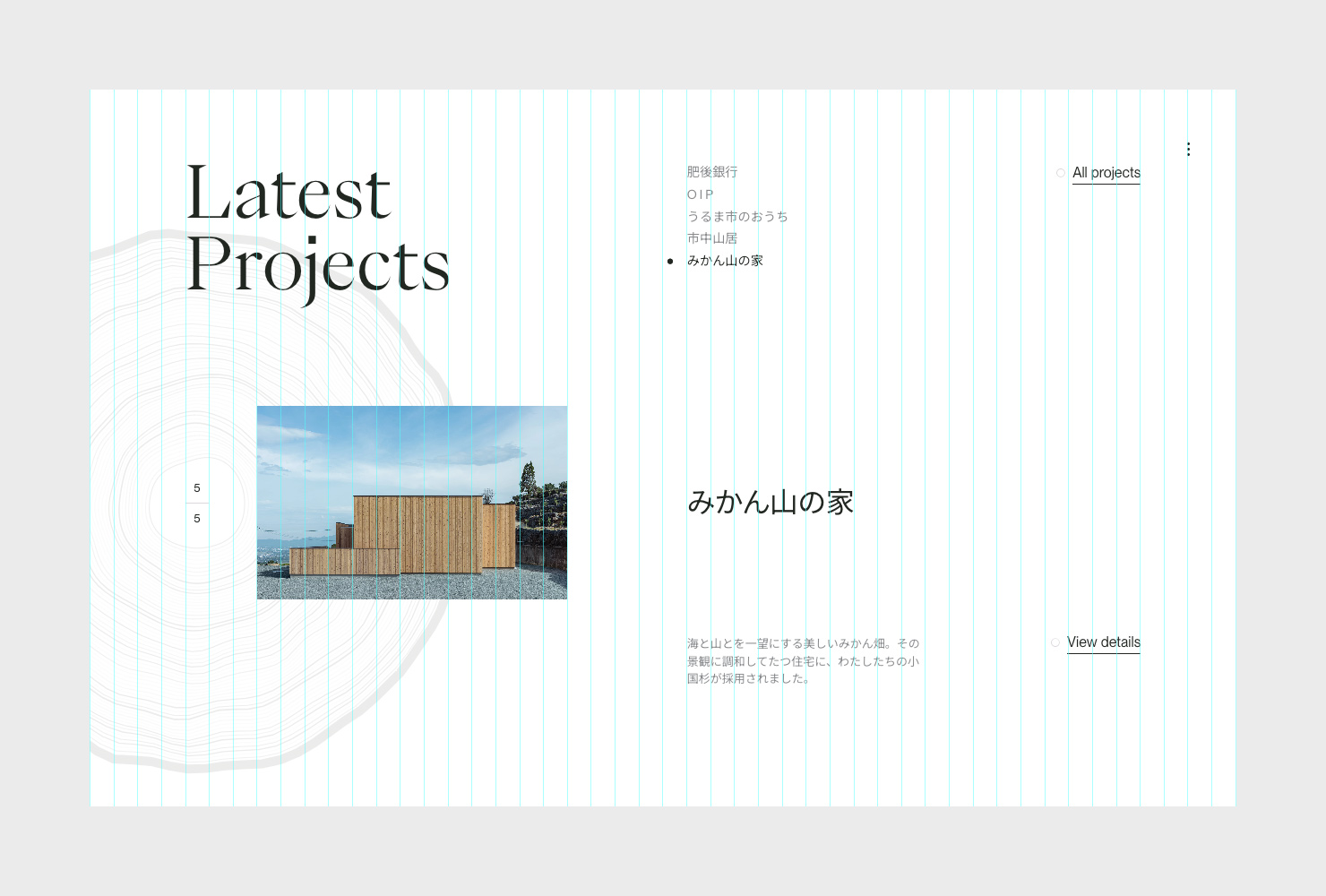
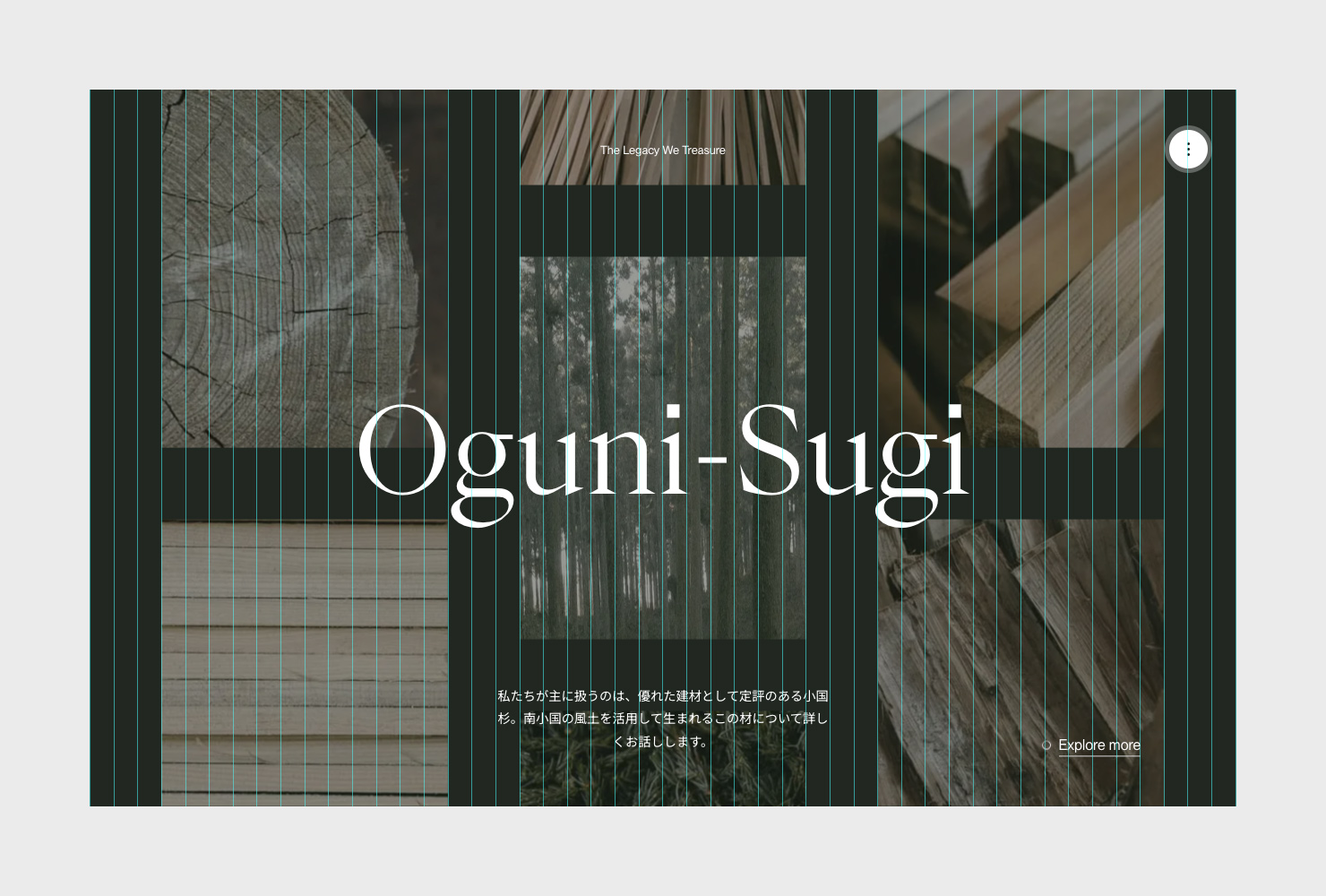
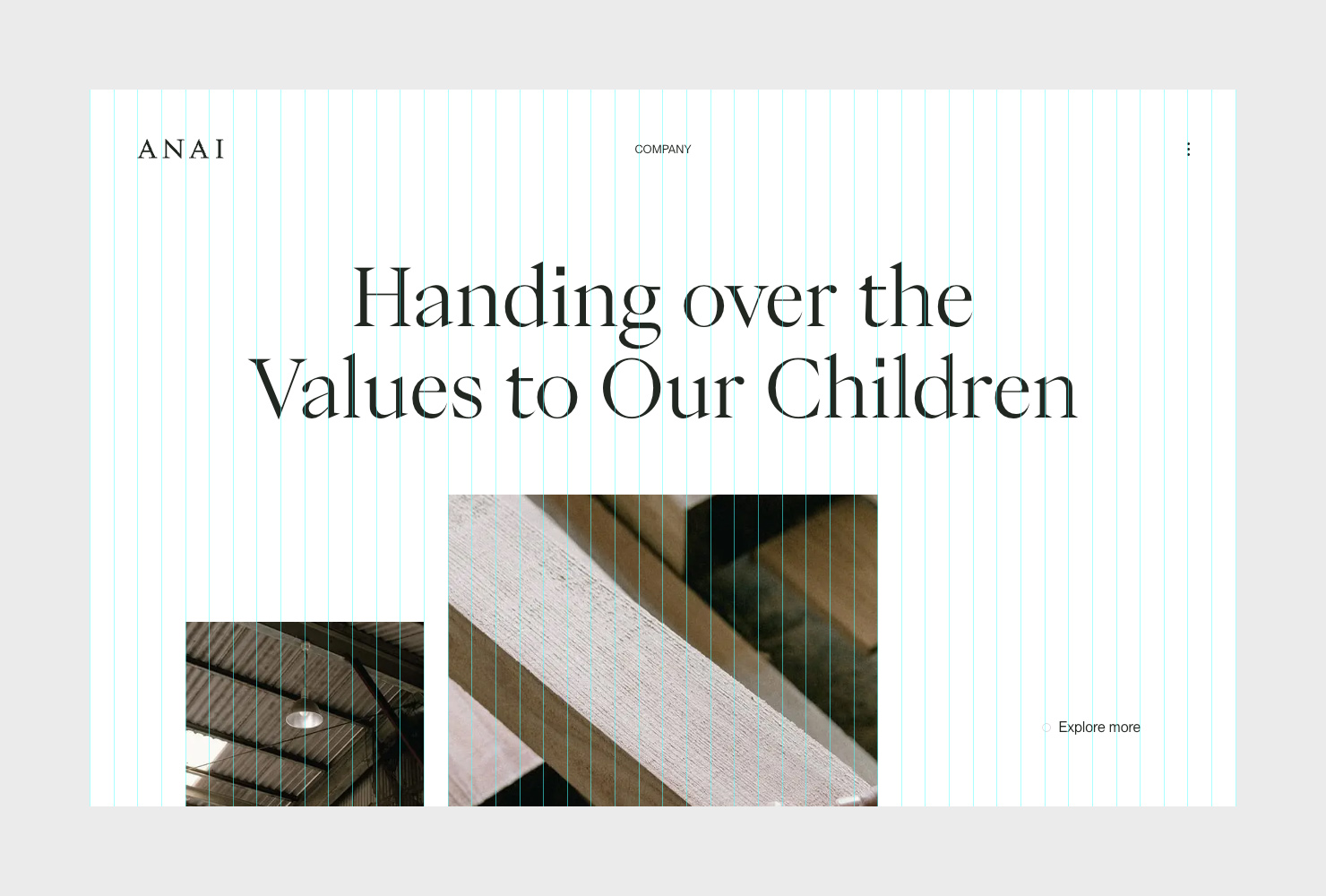
To express the structured qualities of processed timber, scroll-linked animations were designed so that elements gradually settle into their intended positions. Across all pages, both the design and implementation ensure that elements ultimately align with the underlying layout grid, as shown below.
Transition
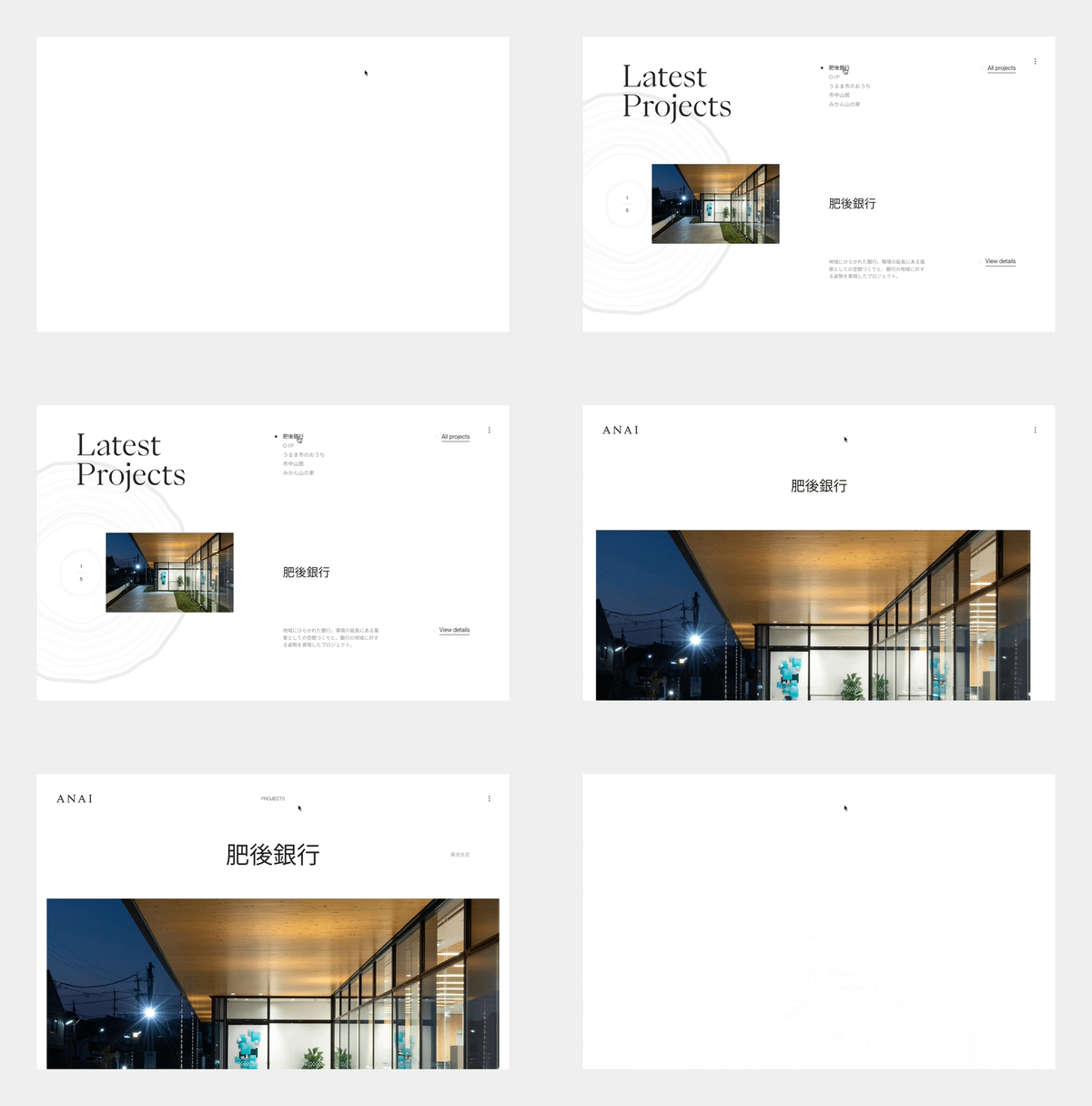
Custom page transitions were also developed for specific navigation paths, including:
- Home → Brands Details
- Home → Projects Details
- Brands → Brands Details
- Projects → Projects Details
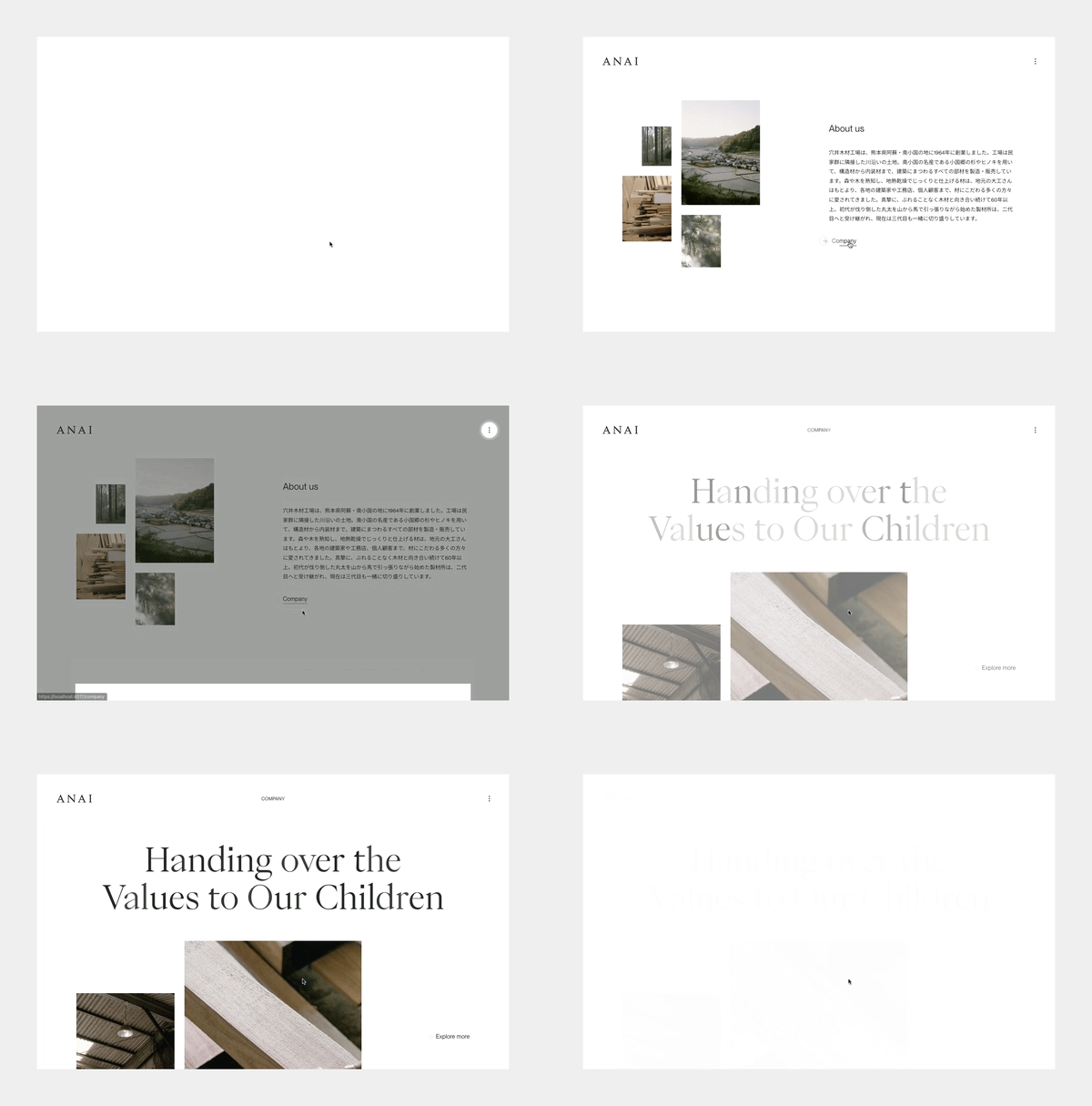
For these transitions, the selected images and text are visually preserved as users move between pages, creating a seamless experience. On the other hand, when navigating backward using the browser's back button, the transitions switch to simpler fade-in and fade-out effects to minimize perceived waiting time. (Some of these behaviors are implemented only on the Japanese version of the website.)

Technology
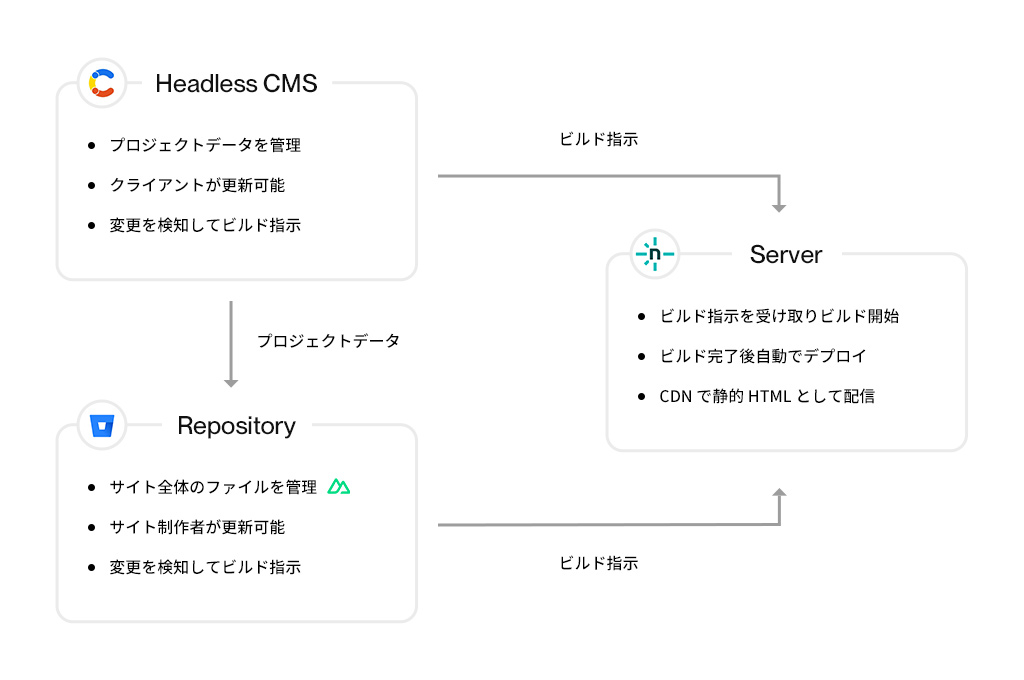
The website was built using a Jamstack architecture. The frontend was developed with Nuxt and integrated with Contentful, a headless CMS, allowing ANAI's team to manage and update project content independently. Netlify detects changes and triggers the build process, during which Nuxt generates static HTML files.
This architecture offers several advantages, including faster page loading and improved security. It is also connected to the development repository, making it straightforward to publish updates once the development and deployment environments are properly configured.
WebGL Forest
The menu background features a 3D forest created with WebGL.
Although implementation complexity and rendering performance were important considerations, I wanted to establish a strong visual connection to ANAI's identity as a forestry and timber company. To achieve this, I experimented with multiple prototypes from the early design stages.
In the final website, the forest's colors change subtly depending on the time of day. Building the scene with WebGL also makes it possible to explore a much wider range of color variations and visual atmospheres.
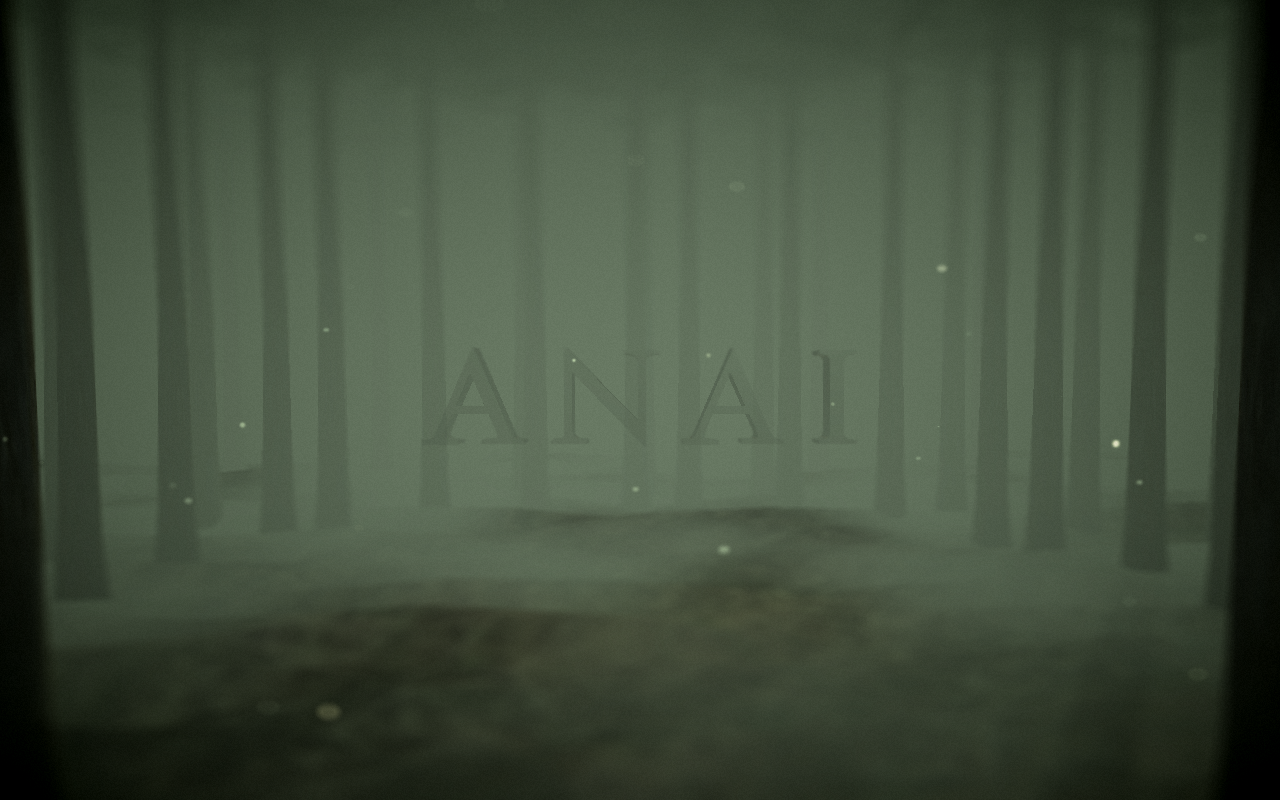
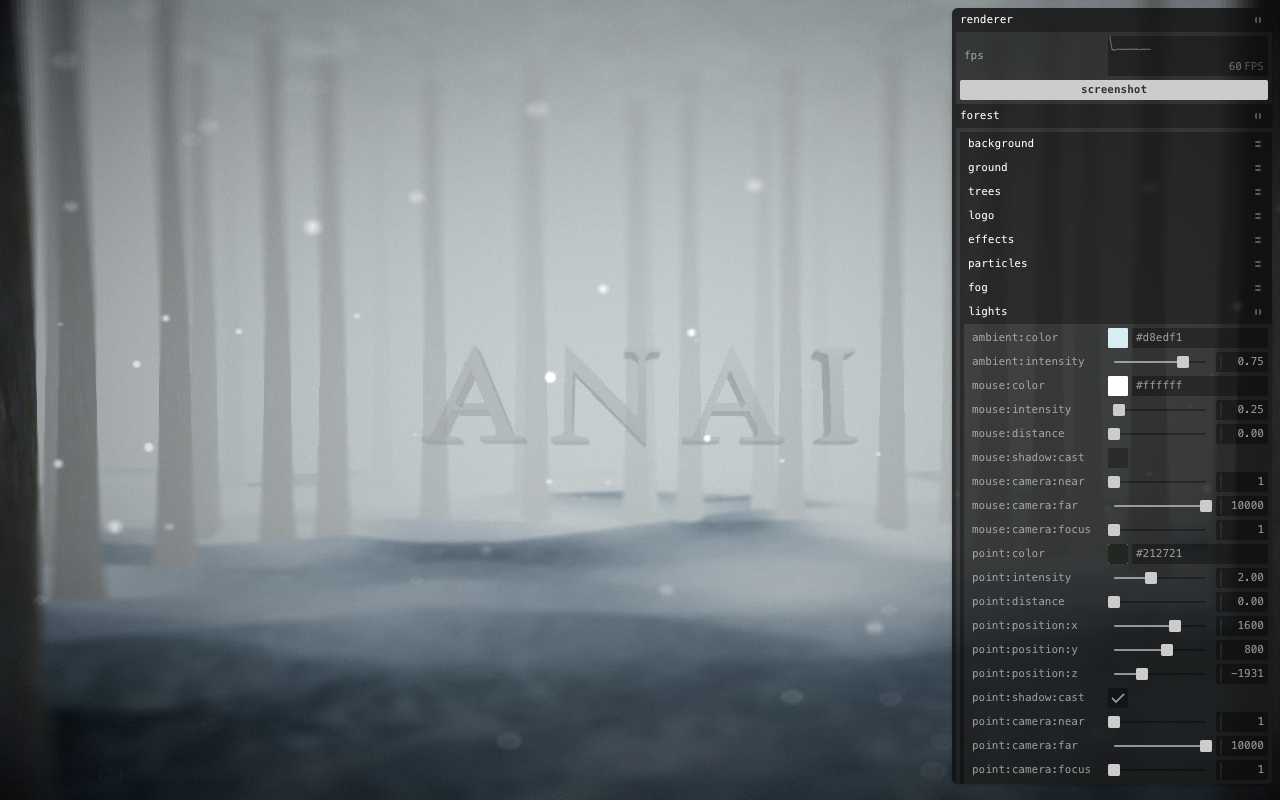
The WebGL scene was implemented using Three.js. To optimize performance, I used tree shaking to reduce the size of the Three.js bundle. The 3D tree models were also optimized with minimal polygon counts and further compressed using Draco.
To reduce rendering costs, the trees were duplicated using InstancedMesh. The number of trees generated is also adjusted according to the screen size. By using ShaderMaterial, I was able to introduce variations in leaf movement and trunk size for individual trees, even though they share the same base model. This helped create a richer and more natural-looking forest.
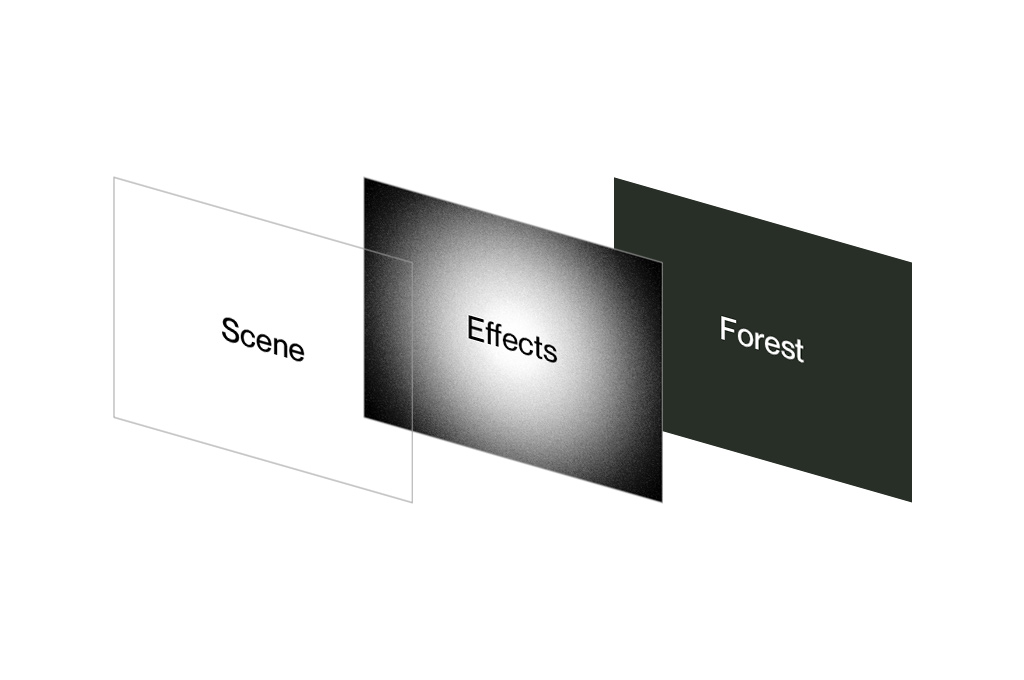
For the final rendering, the entire forest is first rendered to a RenderTarget. Post-processing effects, including tilt-shift, are then applied through EffectComposer before the composited result is rendered to the scene.
GPU performance is also evaluated to determine the appropriate rendering settings. On devices with limited GPU capabilities, such as some smartphones, certain visual effects are disabled to maintain performance.
Credits
- Client: ANAI | Anai Wood Factory
- Designer / Developer : Nobuaki Honma (Garden Eight)